
A milestone reached
And some recent publications

Big news today for this newsletter as a major milestone has been reached. Thanks to all 1000 people who have subscribed - I really appreciate you taking the time to read it!
This post is an update on three things I’ve been busy writing over recent weeks related to the topics of devolution, public service reform and Greater Manchester’s economy.

Firstly, for ThinkLabour I wrote a blog called “Where is Darlington?” pointing out the inconsistencies of governance boundaries around the town. Having been to Darlington many times - particularly when I used to work at the Treasury campus there - I feel the need to point out that I do know where it is.
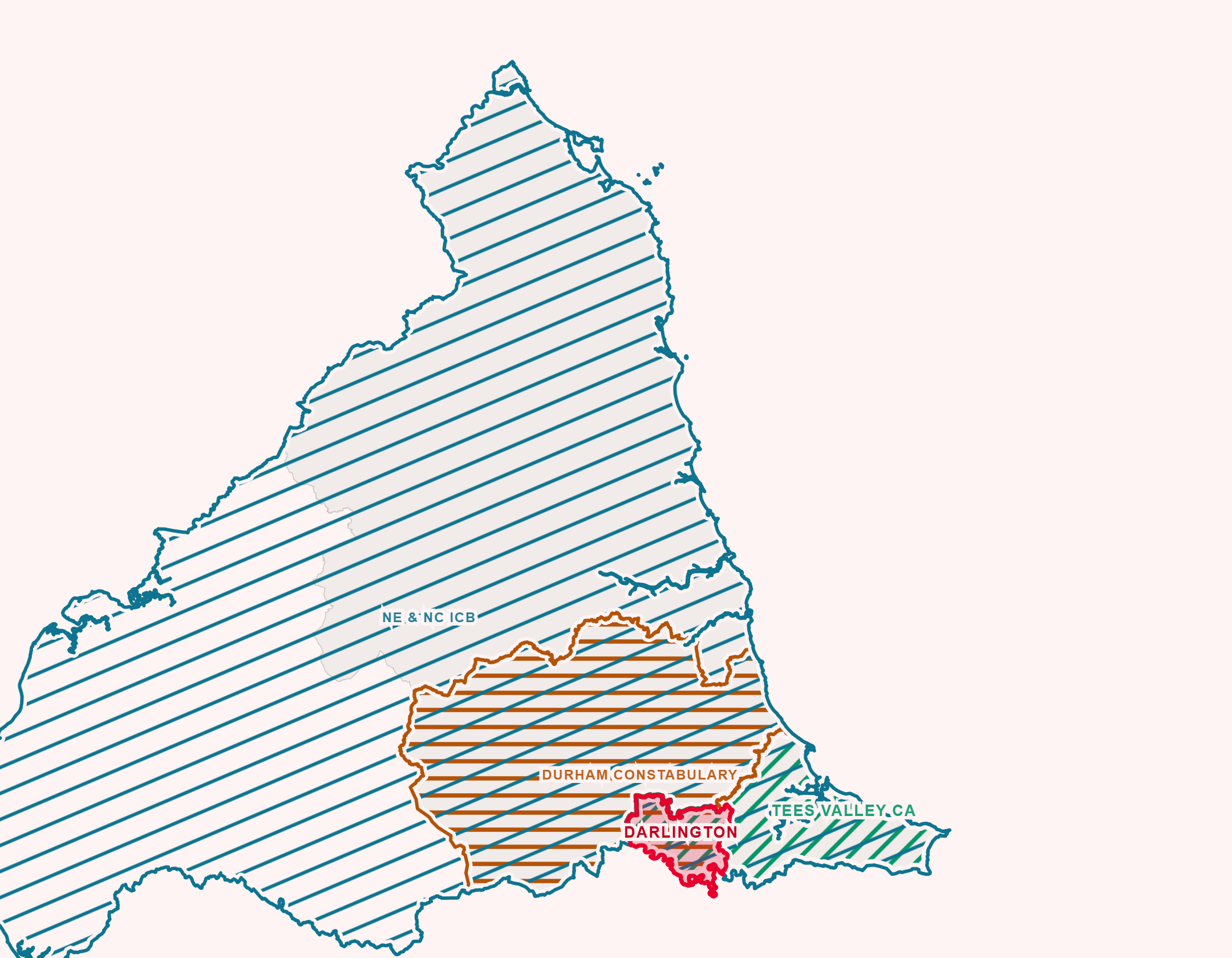
But, it is difficult when pressed to describe which governance area it is part of given differing links to Tees Valley Strategic Authority, the Durham Constabulary and the North East and North Cumbria health area (see map below).
This handy map generator showing the different boundaries covering different areas was created by the excellent Dylan Cridland to highlight the issues. You can create your own just as I’ve done!
Secondly, I wrote a report called ‘Democratic Public Services’ also for ThinkLabour. This highlighted three public service reform trends - ‘the 3 Ds’ - that are democratising, devolving and digitising them. In the report, I highlight what this might mean for different public services and draw on examples here in the North such as the Greater Manchester and South Yorkshire pilots for health devolution.
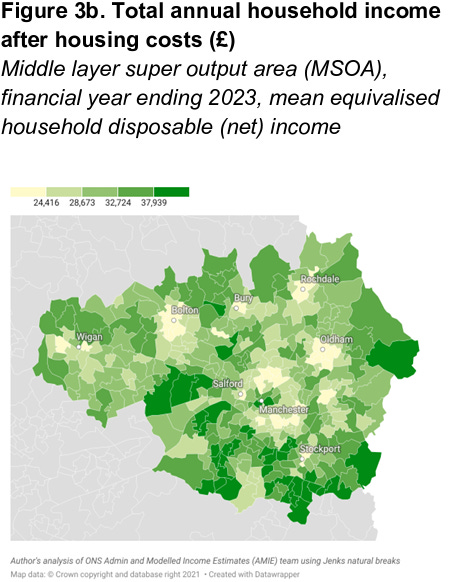
Thirdly, for The Productivity Institute, I joined with Andy Westwood and Joe Peck to look into the recent debate about Greater Manchester’s economic growth. In the paper, we find that some of the ONS data is mixed, but there is significant evidence of economic dynamism when you look at property demand, falling investment risk premia, greenfield investment and rising skills levels in the area. There’s quite a few charts in there - including this one showing incomes by area.
Thanks again for taking the time to read this newsletter - I hope you also find these three papers interesting.